AI News Summary: How ChatGPT and Competitors Changed This Week
The world of Artificial Intelligence continues its relentless pace of innovation, and this week has been particularly transformative. From the evolution of familiar models like ChatGPT to the emergence of powerful new contenders, the landscape of conversational and generative AI is shifting dramatically. Our AI news summary for this week focuses on the breakthroughs that are not just theoretical but are already impacting how we interact with technology, work, and create.
This article distills the most crucial developments, offering a clear understanding of where AI is headed and how these changes will affect users, businesses, and the broader digital ecosystem. We will explore the latest advancements, key product updates, and the increasing capabilities that are making AI more intuitive and robust.
1. ChatGPT’s “Project Guardian” Initiative
OpenAI has announced “Project Guardian,” a significant update to ChatGPT’s safety and ethical guidelines. This initiative introduces advanced moderation AI that can identify and flag potentially harmful outputs even before they are entirely generated, making the platform more reliable for sensitive topics. Furthermore, it incorporates user feedback mechanisms directly into the training loops, aiming for a more responsible and globally aware AI.
2. Google Gemini’s Multimodal Leap in Healthcare
Google’s Gemini model has shown remarkable progress in multimodal understanding within the healthcare sector. This week, new demonstrations revealed Gemini’s ability to analyze complex medical imagery (such as X-rays and MRI scans) alongside patient reports and historical data. This integration allows for more accurate diagnostic suggestions and personalized treatment plans, moving beyond text-only interactions.

3. Anthropic’s Claude 4: Enhanced Context Windows
Anthropic’s Claude series saw a significant upgrade with the introduction of Claude 4. The standout feature is an expanded context window that can now process entire novels or extended research papers in a single prompt. This allows Claude to maintain coherence and draw insights from vastly larger datasets, making it invaluable for researchers, legal professionals, and content creators dealing with extensive documents.
4. Microsoft Copilot’s Deep Office Integration
Microsoft Copilot’s integration into the Office 365 suite has reached a new level this week. Users can now command Copilot directly in Word, Excel, and PowerPoint to generate content, analyze spreadsheets, create presentations from raw data, and summarize lengthy documents with unparalleled precision. The goal is to eliminate repetitive tasks and boost white-collar productivity virtually.
5. Amazon’s Titan Models Powering E-commerce Insights
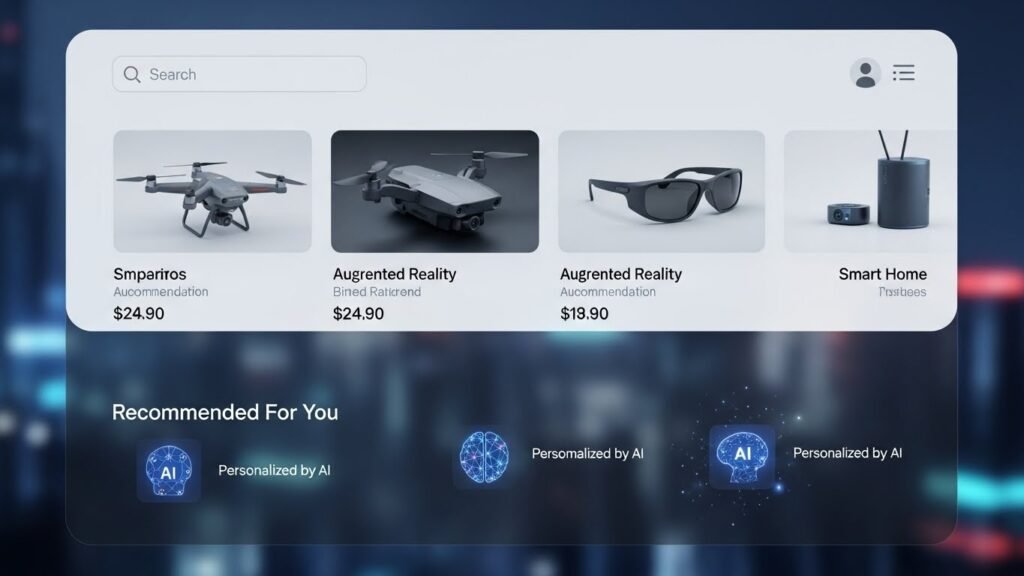
Amazon’s proprietary Titan AI models are increasingly being deployed across its e-commerce platform. This week saw new features roll out, including AI-generated product descriptions that adapt to individual user preferences and real-time trend analysis to help sellers optimize inventory. Titan’s ability to process vast customer behavior data is setting new standards for personalized online shopping experiences.
6. Stability AI’s New Open-Source Image Generator (SDXL Turbo 2.0)
Stability AI has released SDXL Turbo 2.0, an evolution of its real-time text-to-image model. This version offers even faster generation speeds with improved fidelity, allowing users to create high-quality images from text prompts almost instantaneously. This continues the trend of democratizing powerful creative tools for artists, designers, and marketers worldwide.
7. Meta’s Llama 3 Focus on Efficiency
Meta has been focusing on efficiency with its Llama 3 model. This week, they showcased a version that runs effectively on edge devices and even smartphones. The emphasis is on powerful AI that doesn’t require massive cloud computing resources, making advanced AI capabilities more accessible and reducing the environmental footprint of large language models.
8. Adobe Firefly’s Expansion into 3D Content
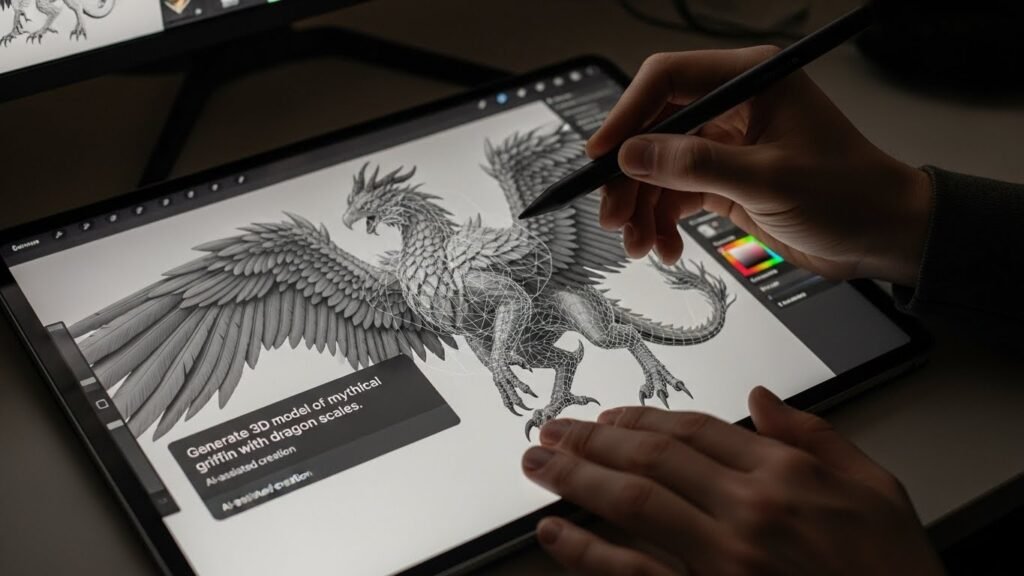
Adobe Firefly, known for its generative AI in image and text effects, has expanded its capabilities into 3D content creation this week. Designers can now use natural language prompts to generate 3D models, textures, and scenes directly within Adobe’s Creative Suite. This significantly lowers the barrier to entry for complex 3D design and animation.
9. AI in Scientific Discovery: Drug Design Breakthroughs
Beyond consumer applications, AI is revolutionizing scientific research. This week, a consortium of pharmaceutical companies announced a significant acceleration in drug discovery thanks to AI models. These AIs are now capable of simulating molecular interactions with unprecedented accuracy, cutting years off the traditional drug development cycle for new treatments.
10. Regulatory Scrutiny Increases Globally
As AI becomes more powerful, regulatory bodies globally are stepping up their scrutiny. This week saw discussions in the European Parliament and U.S. Congress regarding new frameworks for AI governance, focusing on transparency, data privacy, and accountability. The aim is to balance innovation with ethical development, ensuring these powerful tools benefit humanity safely.
The Impact of This Week’s AI Advancements
This AI news summary reveals a clear trend: AI is moving beyond niche applications to become a foundational layer across all digital interactions. The shift towards “Agentic AI” means our systems will be more proactive. Multimodal capabilities are making AI more perceptive, and advancements in efficiency mean powerful AI can run almost anywhere.
How to Stay Ahead in the AI Curve
- Experiment Safely: Try out new AI features from reputable sources (ChatGPT, Gemini, Copilot). Understanding their capabilities firsthand is crucial.
- Focus on Skills, Not Just Tools: Learn how to write effective prompts. Prompt engineering is becoming a valuable skill in the AI-driven workplace.
- Prioritize Ethics: Be aware of the ethical considerations surrounding AI, especially regarding data privacy and bias.

Common Misconceptions to Avoid
- AI is a “Magic Bullet”: While powerful, AI still requires human oversight and clear instructions to perform effectively.
- AI Will Replace All Jobs: Historically, new technologies create new jobs while transforming others. The key is adaptation and learning new skills.
- All AI is the Same: Different AI models excel in different areas. ChatGPT might be great for writing, but Gemini might be better for multimodal analysis.
Conclusion
This week’s AI news summary confirms that we are not just witnessing the evolution of technology; we are at the forefront of a paradigm shift. From ChatGPT’s enhanced safety features to Google Gemini’s healthcare applications and the broader expansion of generative AI into creative and scientific fields, the capabilities of Artificial Intelligence are growing at an exponential rate. Understanding these changes is crucial for anyone looking to thrive in the coming years.
The discussions around global regulation also highlight a maturing industry that is beginning to grapple with the societal implications of its creations. As AI becomes more integral to our lives, staying informed about its progress and ethical development will be more critical than ever.